Land Forces 2026 · Perth The AST development program

Australian SurvivalTourniquet

Saving Lives · Saving Limbs

Haemorrhage remains the leading cause of potentially survivable death on the battlefield.1 Recent conflicts have brought longer evacuation times and longer periods of tourniquet use.2 The AST program is an Australian effort to design and test a tourniquet for these conditions, with Australian manufacture as the goal.

Sovereign
Australian designed · Australian manufacture planned
Patent
Pending · Australian IP
Partners
Evaluation · Research · Funding
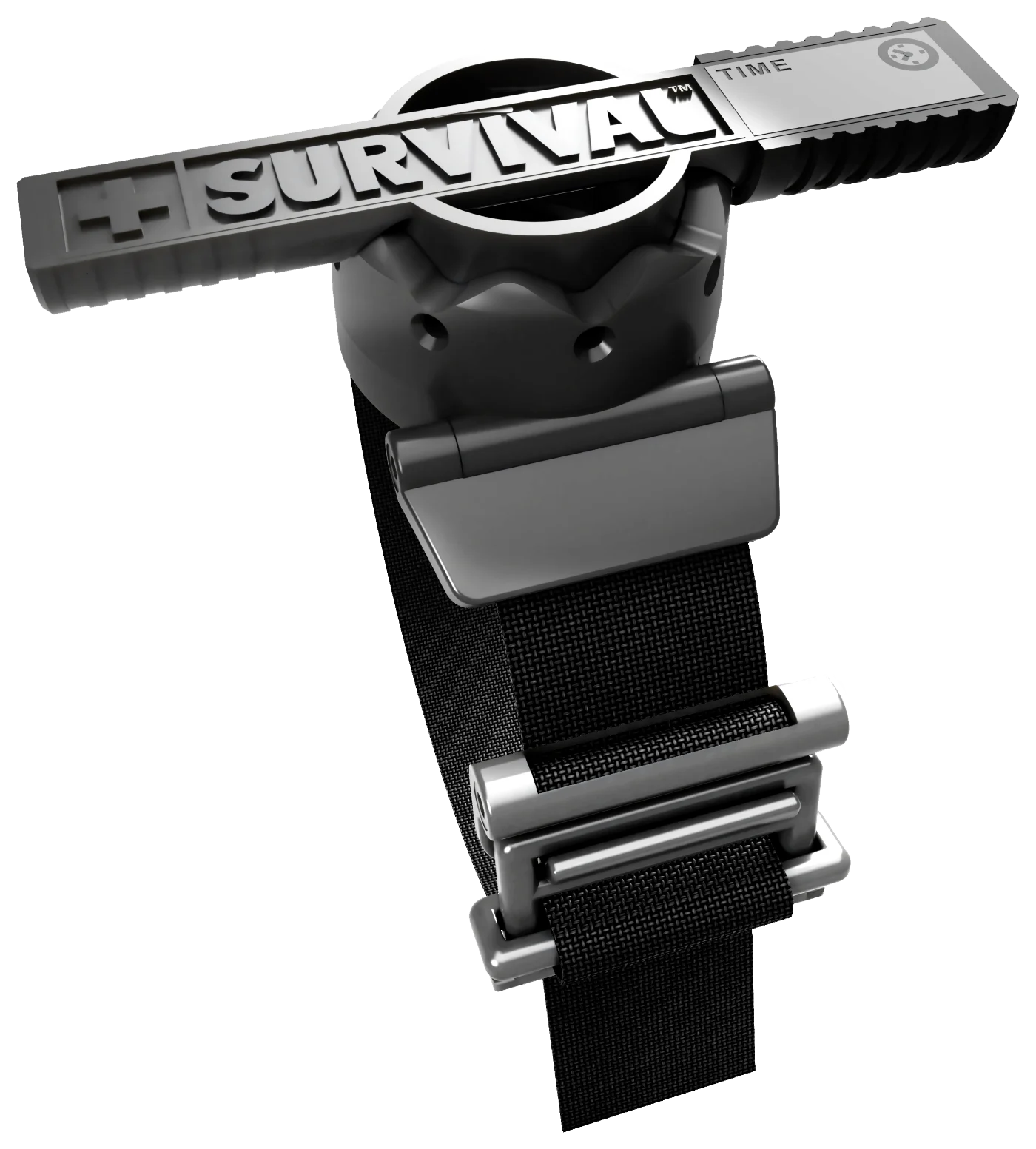
Australian Survival Tourniquet — pre-production prototype AST · Prototype Pre-production prototype · Not for sale or supply

What we're investigating

Three documented problems · One Australian test program

Each question below pairs a published finding with a design feature we are testing. These are the questions our testing program is designed to answer — they are not claims about the device.

01Application

Getting it on right

In a manikin study of non-medical users, the most common reason tourniquet application failed was excess slack in the strap.3

Feature · The windlass is intended to take up strap slack on the first rotation.

Can this reduce loose application by less-trained users?

02Pressure over time

Holding pressure

Research has reported that applied pressure can fall in the minutes after a tourniquet is tightened.4

Feature · A fixed-pivot windlass, indexed locking detents and a secondary sliding lock.

Can applied pressure be kept more consistent over extended use?

03Tightening

Consistent tightening

Studies have reported completion pressures well above what is needed to occlude arterial flow.5

Feature · Locking at 45° increments in place of a half-turn locking arc.

Can finer indexing make tightening more consistent between users?
Where we are · the full program

The AST development program

  1. DONEDesign & prototyping: 20+ iterations; patent pending
  2. NOWBench testing: mechanical testing ongoing in Australia
  3. NEXTIndependent evaluation: university or military research hospital
  4. THENARTG application: Australian TGA
  5. THENFDA 510(k) submission: planned, United States
  6. THENPeer-reviewed publication: recognised trauma-care journal
  7. GOALCoTCCC submission: Committee on Tactical Combat Casualty Care
What we're looking for

Partner with us

  1. 01Evaluation partners — formal, approved evaluation programs
  2. 02Research collaborators — universities, clinical researchers, test facilities
  3. 03Funding partners — Defence innovation, grant and research funding
  4. 04Introductions — capability, health and acquisition

Partner with us to take an Australian tourniquet through independent evaluation, ARTG application and CoTCCC submission.

Talk to us · Land Forces 2026 · Perth

See the prototype on the stand

Pod 2 · Level 2
Partner with us